

In many ways, when it is dark at night, it is harder to see. Right now in the world, we could say there is a darkness of afflictive emotions spreading chaotically and causing destruction all around the planet. In such spiraling darkness, it becomes harder to see the light of our true highest potential in ourselves and others. At the same time, only when it is dark does the moon begin to truly shine. Only when it is dark can we begin to see the infinite waves of stars and galaxies sailing through the heavenly oceans. While darkness can obscure, it can likewise help us focus on subtle light that would normally be impossible to see.
Amidst the backdrop of the dark madness of our modern world, there are still living pathways that we can access to be in touch with the experiential depths of the true potential of ourselves and others from within. In the dzogchen great perfection traditions of Tibet, there are two central pillars of instruction that show us the process of tregchö (cutting through) discursive thoughts into the primordial pure nature of mind and tögal (directly crossing) into the direct experience of our spontaneously present Buddha nature wherein we encounter the hidden kayas (enlightened bodies) and primordial wisdoms that are the ultimate inheritance of every being and Buddha throughout the universe. In short, tregchö is meditating on the uncontrived nature of mind. Then, with that basis of practice, tögal involves the gradual process of opening up channels so that we can see the hidden pure light of our Buddha nature directly with our eyes.
Normally, or we can say more commonly, tögal is practiced harnessing the condition of sunlight and the open sky during the daytime. However, there is also a very old tradition that also goes back to the origins of tögal practice that involves doing tögal in darkness, both as extended secluded dark retreats and during the dark periods of the regular night. In this world of sensory overstimulation, the simple act of being in darkness might have a number of real benefits, especially as a place where many of us most comfortably sleep. Beyond this though, there are the ancient dzogchen techniques that we can use to achieve nothing less than complete Buddhahood. These techniques have been closely guarded for centuries and often passed from one practitioner to another with high degrees of secrecy.
The following general introduction and providing access to the more detailed instructions are being shared so that these precious authentic lineages of practice can continue to be passed on and flourish. Without access to these teachings in English and other modern languages, there is a very real possibility that the active transmission and practice of these techniques could be lost, if not slowly dwindle away. When modern meditation fads come and go like the rapid-fire advertisements on the screens we find everywhere, it’s critically important that we don’t lose sight of the real authentic traditions that came before us. Ultimately, to derive the full benefit of these instructions it’s absolutely necessary to work with an experienced and qualified teacher that holds these lineages. Otherwise, we might be fooling ourselves.
In the generation stage practice of vajrayana Buddhism, we meditate upon the outer universe as being the pure mandala of the deities and ourselves and all sentient beings within that as Buddhas or enlightened deities. Vajrayana empowerments introduce us to variations of our own hidden enlightened body, speech, and mind. Through training in seeing reality visualized as the deity, hearing all sounds as mantra, and experiencing the uncontrived nature of the mind we are liberated into the three kaya enlightened bodies of Buddhahood. In dzogchen tögal practice we don’t generally visualize anything, but through harnessing the view of tregchö and applying the techniques of the unmoving postures, gazes, and so forth diligently for years, eventually the mandalas and deities appear directly to our own eyes without any fabrication. This is possible because the mandalas and deities are ultimately hidden inside us as our temporarily obscured Buddha nature. The techniques of practice allow this hidden Buddha nature to appear to our senses directly in our field of vision.

In tögal one of the main techniques involves squinting and staring into the rays of the rising or setting sun. In those rays of light, circular rainbow spheres or bindus appear along with an array of other luminous phenomena. By continuing to deepen in practice and concentration over the course of years, these ripen into full mandalas filled with deities which we ultimately merge inseparably with, fully becoming in this very lifetime the enlightened potential that was always within us. In the practice of dark retreat there are additional techniques that are applied to enhance and catalyze this process even further.
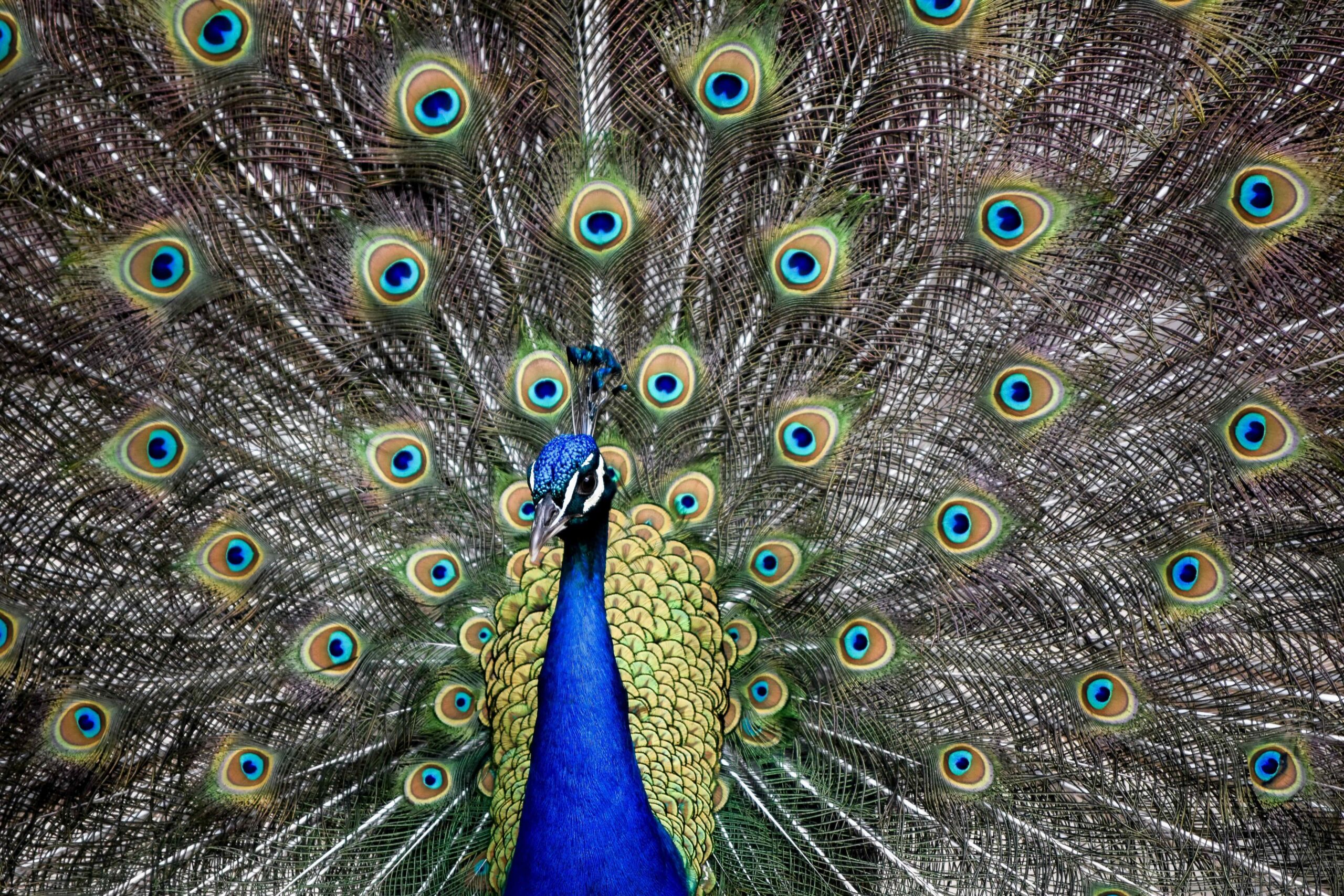
Eyes of Peacock Feathers and the Visions beyond Death
The bindus that appear in dzogchen tögal practice are likened to the eyes of peacock feathers. Peacocks in vajrayana Buddhism are also used to symbolize the alchemical transmutation of poisonous afflictive emotions into primordial wisdom, just as they devour poisonous snakes and then according to legend transform that into the colors of their feathers. Similarly, when contemplating the visions of tögal and dark retreat, it is said that these are the visions that appear after death in the bardo of reality. Through training in these visions right now in this lifetime, then at the time of death our mind has deep familiarization with such, and we are liberated into the Buddha nature of the three kayas without a bardo experience. In later developments of the dark retreat tradition, we are taught to perform retreats for seven or forty-nine days, which symbolize the amount of time a consciousness can spend in the bardo where similar visions also occur. In this way, tögal practice in general and specifically doing it at night or in darkness is a way of taking death onto the path, transmuting the difficult experience that normally entails suffering into the realization of our ultimate potential. When we practice in darkness too, it allows us to see and focus on what has been hidden the deepest from us. Like seeing the light of the stars in the night sky, through the dzogchen yogas of the night and darkness, we see beyond the veil of our physical body and death into the five rainbow lights buried deep inside our indestructible heart centers.
Early Sources of Dark Retreat Instructions in the Dzogchen Tradition
The earliest explicit sources for instructions on the dzogchen nyingthig heart essence tradition of tögal practice are the Seventeen Mengagde Tantras, the early rare commentaries on those tantras, and the Vima Nyingthig that is the first part of the famous Nyingthig Yabzhi (Four Volumes of the Heart Essence). Zhangtön Tashi Dorje (1097 – 1167) is the great treasure discoverer that collected and revealed the Vima Nyingthig alongside the Seventeen Tantras. It is likely that some of the early rare commentaries on the Seventeen Tantras attributed to the great Indian Pandita Vimalamitra, who attained the rainbow body of the great transfer, provided at least some of the inspiration for the instructions in the Vima Nyingthig itself, particularly in the case of the materials related to dark retreat and tögal enhancing practice. These commentaries may have been part of the theoretical bridge between the arcane pith tantras and the more elaborate instructions that appeared in the Vima Nyingthig treasure. Here are two quotes from these commentaries that make relevant references to the reasons behind calling the eyes the ocean and the practice of ocean focusing, which is a central component of dzogchen dark retreat and tögal enhancement.
It says in the Secret Tantra of the Blazing Illuminating Lamp of the Great Pandita Vimalamitra’s Experiential Realization: Commentary on the Unobstructed Transformation of Sound Tantra by Vimalamitra:
“Ocean refers to the subtle channels of the body of accumulated habitual patterns. These channels are like irrigation canals that draw the bindus through them. Furthermore, when uniting practice with the ultimate nature of reality, the sun and the moon refer to your two eyes. Light refers to the sense organs of the eyes without action or agent. When not distracted by other objects, it is submerged. Furthermore, since the eyes have the nature of water, they are called the ocean. In that way, primordial wisdom becomes clear through the two eyes. Through practicing with focus on the lamp of the completely pure expanse in your visual field, it is certain that you will completely see these visions of primordial wisdom.”
It says in the Commentary on the Sixfold Expanse of Samantabhadra by Vimalamitra:
“To explain how things appear through ocean focusing, by merely pressing (the two eyes) simultaneously, the lamp of the empty bindu will definitely appear like holding the eye of a peacock feather in your own hand. The lamp of visions appears externally in that way. Furthermore, by practicing through pressing again and again, the pure visions of the aspect of primordial wisdom will then appear clearly to the domain of your senses without having to make the effort of pressing on the channel with your fingers. Since the five primordial wisdoms are naturally pure of obstructing conditions, they appear freely in your outer field of vision. Through pressing again and again on the channel, the pure visions of light will arise. Through the lamp of the original emptiness that is the source of all reality, the stains of afflictive emotions are naturally purified. Thus, these pure visions appear within the gaze of your own eyes. Practicing in that way, when you see the lamp, when you are pressing, and when you are not pressing the channels, the lamp itself primordially appears with equality. It is not something that is just suddenly fabricated in the mind.”
Ocean Focusing and Settling the Ocean into its Clear Essence
Building upon the metaphor of the ocean, the specific practices related to dzogchen dark retreat here contain two special elements: the active Ocean Focusing (rgya mtsho ar gtad) and the more relaxed Settling the Ocean into its Clear Essence (rgya mtsho dwangs su gzhug). In these, the ocean is the eyes or the channel of vision through which the inner inherent visionary potential of the enlightened kayas and primordial wisdoms can externally manifest in our visionary field. The technique of focusing here works particularly well in the condition of darkness, where we can see the luminous lamp of the empty bindus without the external conditions of light. Part of the actual technique of ocean focusing involves the precise and careful application of gentle pressure on the outsides of both eyes with the thumb and index fingers upon the corners of the closed upper and lower eyelids. Without proper guidance from a lineage holding teacher with experience, this technique can be quite dangerous to our eyes and our vision. Hence, the critical importance of direct guidance and training. By applying careful gentle pressure in this way and utilizing the supporting condition of darkness, the rainbow bindus and other aspects of the tögal visual phenomena are more easily brought into focus in our field of vision. However, the goal of practice is not to just press on our eyes and release that back and forth endlessly.
The next stage of practice is to rest the hands and let the visions unfold naturally. This is called settling the ocean into its clear essence. Sometimes this second aspect of practice is done with specific unmoving gazes and postures. In this second aspect of practice we rest and allow the innate display of the kayas and primordial wisdoms to unfold directly within our field of vision inseparable from the open uncontrived luminous nature of mind. Ultimately, through training in these techniques, we get to the place where we can enhance our practice through tightening our gaze alone without needing to put any additional pressure on the eyes with our fingers. Likewise, just as we need darkness to see the subtle light of the stars, practicing at night and in darkness can be a potent catalyst in our journey of learning to see the subtle hidden visions of our Buddha nature from within. However, as they unfold, they eventually become more apparent wherever we are, day and night.
Nyingthig Yabzhi – First Elaborate Dark Retreat Instructions
Where the Seventeen Tantras and their commentaries presented some of the background theory and key techniques in brief, there are nine texts in the Nyingthig Yabzhi that contain elaborate practical instructions on dzogchen dark retreat and tögal enhancement. In my quest to learn more about the experiential traditions of practicing dzogchen in darkness, I’ve found that the materials in the Nyingthig Yabzhi are essential sources of the early tradition that culminate in the presentations by Longchenpa (1308-1363). However, the evolution of these visionary techniques did not at all stop there. So this first post is one part of a three part series that will present the dzogchen dark retreat systems of two other important and interrelated treasure cycles. Eventually, we will also look at some of the parallel Kalachakra completion stage practices that include systems that utilize similar paradigms of eliciting enlightened visionary phenomena in darkness and light.
Yangti Nagpo – Expanded Visualizations and the Peaceful and Wrathful Deities
The second future post in this series will be of the materials related to the Great Perfection Black Quintessence Single Golden Syllable (Dzogchen Yanti Nagpo Sergyi Dru Chigpa) revealed by Dungtsho Repa the Later (who was understood to be the reincarnation of Dungtsho Repa the Earlier). Dungtsho Repa the Later lived in the 14th century and was a student of the rainbow body achieving dakini Kunga Bum (1308-1382). The instructions of this cycle almost certainly build upon inspirations from the Nyingthig Yabzhi lineage but also reveal new ways to enhance dark retreat and tögal practice with a series of elaborate visions, a time structure in which to do retreats, and a supportive framework of cultivating the practice of the Peaceful and Wrathful Deities. There is a special rare lineage related to this practice that has been maintained in Drigung connected circles.
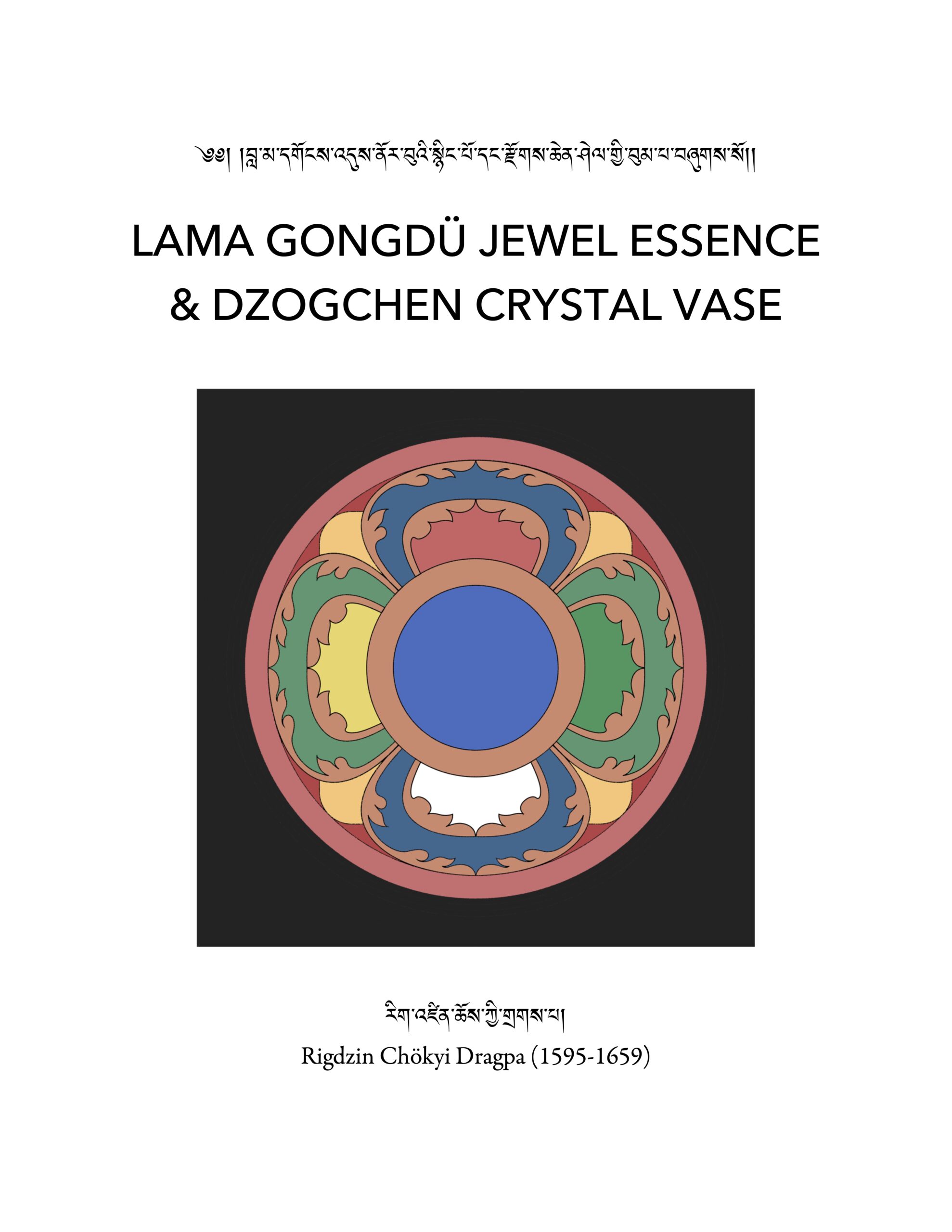
Lama Gongdü – Expansion through Visionary Hearing, Sleep, Dreams, and Subtle Energy
The third future post in this series will draw from the elaborate instructions contained in the Lama Gongdü Refined Gold Dzogchen Essence Treasure that were revealed by Sangye Lingpa (1340-1396). Sangye Lingpa’s treasure likewise seems to build on the Nyingthig Yabzhi lineages but then also expands on the system of doing dark retreats with more guidance. These treasures include balancing the practice of the dark at night with that of the light of day in detail. They include the enhancing techniques of working with visionary sounds (more elaborately found in the Conch Shell Letter Instructions of the Vima Nyingthig) and expanding dzogchen practice into sleep, dreams, and the subtle energy practices of tummo fire. A special presentation of many of practices in the Lama Gongdü cycle and a key portion of these dzogchen instructions is already available now as a translation of Rigdzin Chökyi Dragpa’s Lama Gongdü Jewel Essence & Dzogchen Crystal Vase.
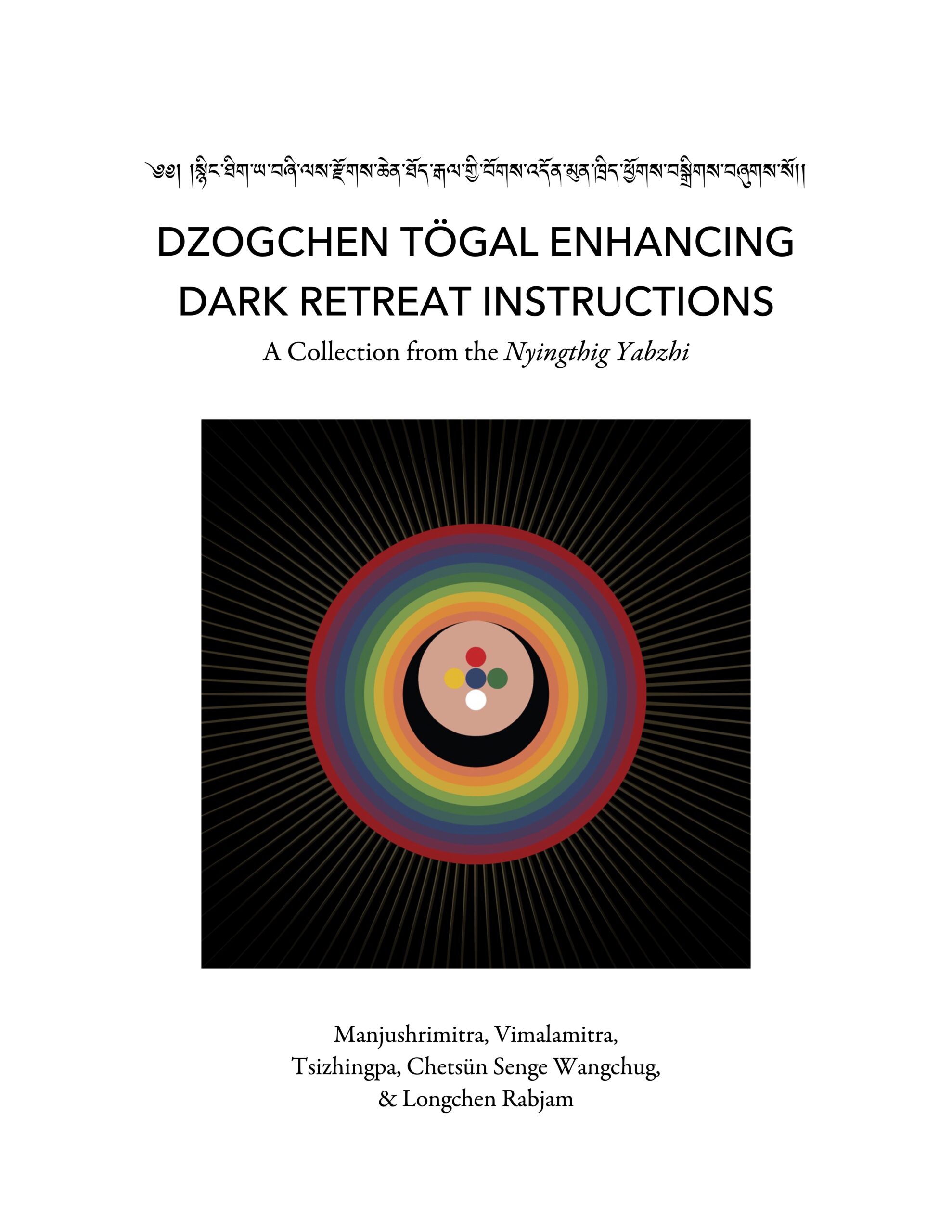
Dzogchen Tögal Enhancing Dark Retreat Instructions: A Collection from the Nyingthig Yabzhi
This collection of translations that is now available contains all nine texts in the Nyingthig Yabzhi that are related to dzogchen dark retreat. These texts are attributed to the Indian master Manjushrimitra, the mysterious Tsizhingpa, Vimalamitra, Chetsün Senge Wangchug, and Longchenpa. These incredibly unique materials are interwoven with the first four teachings by Manjushrimitra being elaborated upon by the later commentaries. Together, they build a cohesive system of how to practice dzogchen utilizing the condition of darkness. This system has continued to be transmitted and practiced to this very day, especially through later developments that became integrated into later treasure cycles. These translations provide a starting place to further study with qualified teachers with the appropriate transmissions. They also may be very helpful in learning more about the inner mechanics of the visionary dzogchen practices and how we can practically utilize these ancient techniques.
Here is a list of the included translations:
- Ocean Focusing: Great Self-Abiding – By Manjushrimitra
- Ocean Focusing Pith Instructions: Crucial Point of Gathering Appearances – By Manjushrimitra
- Heart Drop of Nectar – By Manjushrimitra
- Seeing the Meaning of the Key Points of Awareness – By Manjushrimitra
- Innermost Refined Essence: Tögal Enhancing Ocean Focusing Instructions – By Tsizhingpa
- Three Anchoring Stakes: Supporting Secret Pith Instructions – By Vimalamitra
- Lamp of the Condensed Key Points of the Three Anchoring Stakes – By Chetsün Senge Wangchug
- Wheel of Luminosity Day and Night – By Longchen Rabjam
- Ocean Focusing Dark Retreat Instructions: Wheel of Luminosity – By Longchen Rabjam
The first seven texts are all in the Vima Nyingthig. The last two texts connected with Longchenpa are found in the Lama Yangtig and Zabmo Yangtig respectively. The collection begins with Manjushrimitra’s cryptic poetry where the loose framework of the practices is presented with key instructions throughout. At this stage there was probably an oral tradition that was essential to learning the instructions. Then Tsizhingpa’s Innermost Refined Essence Tögal Enhancing Ocean Focusing Instructions begins to detail the precise instructions of the practices, which are then further clarified by the presentations of Vimalamitra, Chetsün Senge Wangchug, and Longchenpa. It should be noted that the Lamp of the Condensed Key Points of the Three Anchoring Stakes and the Ocean Focusing Dark Retreat Instructions Wheel of Luminosity borrow much of their material from Tsizhingpa’s earlier arrangement. However, each text has a specific presentation of the Tibetan with a number of small but potentially important differences. Since these were all included in the Nyingthig Yabzhi collections codified by Longchenpa and transmitted to this day, they have been included in their entirety. All of these materials are quite useful to understand the development and practice of the dzogchen dark retreat and tögal enhancement.
The following is a key extract from this collection. It is one of the recurring streams of instruction throughout these texts. In the poetic lines of the Innermost Refined Essence Tögal Enhancing Ocean Focusing Instructions from the Vima Nyingthig it says:
“The essence is the completely pure dharmakaya free from elaboration and naturally empty.
The nature is the sambhogakaya appearing in bodies with the enlightened marks and signs.
Compassionate energy tames the variety of beings through nirmanakaya emanations.
The colors of the primordial wisdom of radiant emptiness
Appear as fivefold blue, white, yellow, red, and green.
The primordial wisdom of the expanse of reality is the essence of space.
Mirror-like primordial wisdom is unborn and unceasing clarity.
The primordial wisdom of equality is understanding that everything is inseparable.
With discriminating primordial wisdom individual things are not labeled yet distinctly appear.
Through activity accomplishing primordial wisdom the fruition is made manifest.
Possessing the five kayas, fly through the sky of realization and conduct.
It is free from the elaborations of characteristics and empty of conventional words.
Without daytime or evening, day and night are non-dual.
It is impossible to generate thoughts of dualistically grasping samsara and nirvana.
Cherish seizing this through the elixir of the view of cutting through (tregchö).
The teachings of the Buddha are the supreme lamp of the world.
These are the instructions on settling the unmoving ocean into its clear essence.
There is no doubt that signs will arise during both the day and night.
If you have not previously trained in awareness,
In the bardo, primordial wisdom will arise as a mara demon.
Through grasping at the mind of the illusory body of awareness,
We give ourselves our own bad forms of birth.
When we actualize realization and enlightened conduct,
We see the illusory body of sambhogakaya luminosity.
The meaning of awareness is the true nature of things itself.
Always look into the limits of space.
The nature of reality is like the sun appearing in space.
Realization is like the continuous flow of the Ganges river.
The bodiless form is the supreme body.
The final body is realizing the dharmakaya.”